There is one way in for everyone: the door. Type your number or your address, a six-digit code arrives, you type it back, you're in. The system works out whether this is your first time or your hundredth — you never have to.
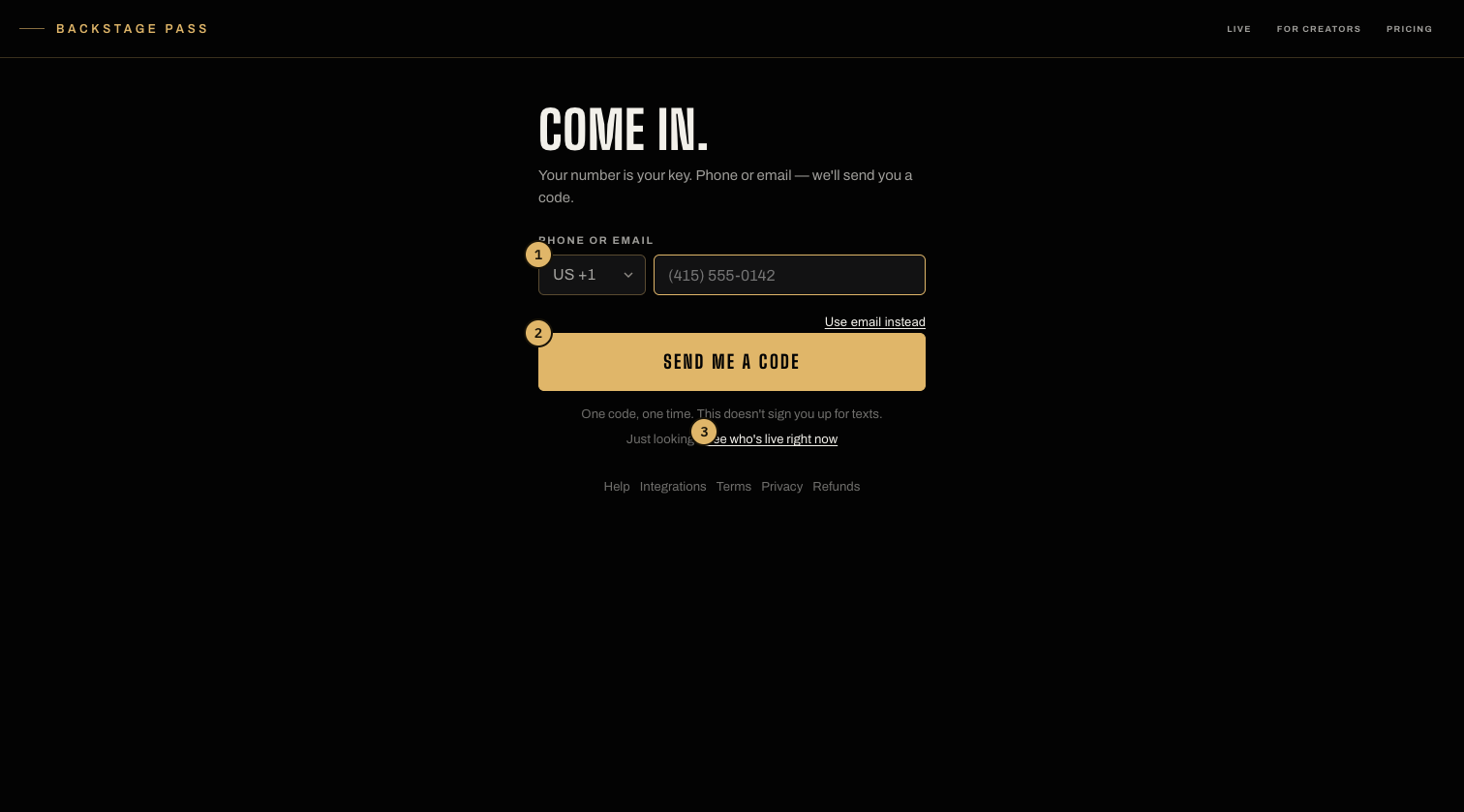
- Two taps that skip the typing. Signing in with Google or Apple proves the same identity — it is not a second account.
- One field. It opens on email; "Use phone instead" swaps it to a country picker and a number, and typing either shape works whichever way it is set.
- One button. The code arrives by text or email — whichever you typed.
- The live directory is one tap away, no account needed.
No sign-up form, on purpose
With a one-time code, the difference between signing up and signing in is fake — so the product doesn't have it. Come to the door with a number or an address, prove it once, and it's yours. The code screen says it plainly: one code, one time — it doesn't sign you up for texts. Consent to be texted is a separate choice you make later, in your own settings, or never.
What your key is
The phone number or email you sign in with is your key. Both can live on one account, each proven by its own code. You can add the other one later from your settings — an address typed there without a code behind it isn't used for anything until you prove it at the door once.
Getting back where you were
Anything that needs to know who you are — joining chat, buying a ticket, following — sends you to the door and lands you right back where you were standing. You never lose the room you came for.
For creators
A creator is the same account with the switch flipped — see Claim your handle. Creators who have set a password can also use the password door at /creator/login; the one-field door works for them too, always.
Signing out
Log out in the top bar ends the whole session — the fan side and, if you're a creator, the studio side, together. One identity, one way out.